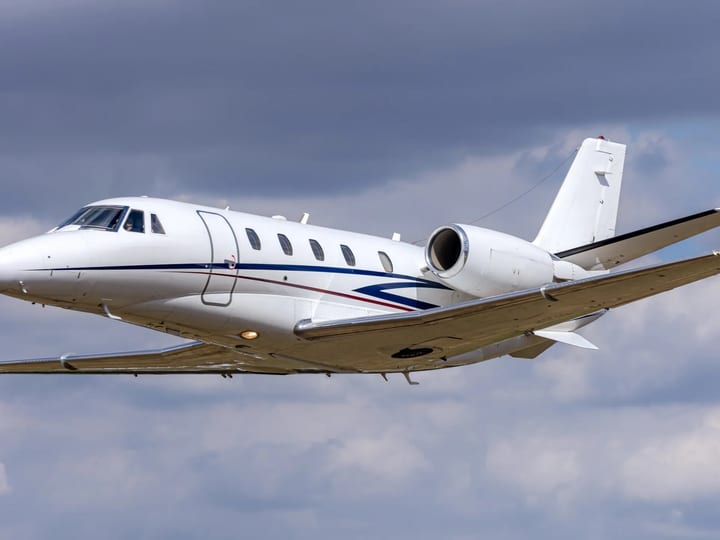
Choosing between a new and pre-owned private aircraft is not simply a question of whether the buyer prefers something new. It is a mission, timing, capital, risk and availability decision.
A new aircraft can offer current technology, factory support, warranty protection and extensive configuration choices. A pre-owned aircraft can provide faster availability, a lower acquisition price and access to models or cabin categories that would require substantially more capital if purchased new.
Neither option is automatically better. The right answer depends on how the aircraft will be used, when it is needed, how long it will be owned and how much uncertainty the buyer is prepared to manage.
The comparison should begin with the mission and total ownership plan—not the appearance of the aircraft or the advertised purchase price.
Start with the mission, not the model year
The first step is to define what the aircraft must accomplish. A newer aircraft that cannot consistently complete the buyer's most important trips is not the right choice. A well-maintained pre-owned aircraft that fits the mission may deliver greater practical value.
Define the expected routes, passenger count, baggage requirements, airport constraints, annual utilization and cabin expectations before comparing individual aircraft.
Key mission questions include:
- What routes must be completed nonstop?
- How many passengers travel on a typical trip?
- How much baggage or specialized equipment is carried?
- Are short or performance-limited airports important?
- Is international capability required?
- How quickly must the aircraft enter service?
- How many years is the aircraft likely to be retained?
- Which cabin, connectivity and accessibility features are essential?
For a structured mission analysis, see How to Choose the Right Private Jet for Your Mission.
New and pre-owned aircraft solve different problems
The decision becomes clearer when the buyer identifies which tradeoffs matter most.
| Decision factor | New aircraft | Pre-owned aircraft |
|---|---|---|
| Acquisition price | Usually higher | Usually lower, depending on age, condition and market demand |
| Availability | May require a production or completion wait | May be available sooner after inspection and closing |
| Configuration | Greater ability to select finishes, equipment and options | Existing configuration may require compromise or refurbishment |
| Warranty | Factory warranty and support may reduce early uncertainty | Remaining or transferable coverage varies; many items may be outside warranty |
| Maintenance exposure | Lower initial age-related exposure, but not zero | Depends heavily on records, maintenance status and upcoming events |
| Technology | Current avionics, connectivity and cabin systems | May require upgrades to meet the buyer's expectations |
| Depreciation | Buyer may absorb the steepest early depreciation | Some early depreciation may already have occurred |
| Selection | Limited to current production aircraft and available positions | Wider range of models, ages, layouts and price points |
When a new aircraft may make more sense
A new aircraft can be attractive when the buyer values predictability, current technology and a configuration designed around a long-term mission.
New may make more sense when:
- The buyer expects to keep the aircraft for many years.
- Factory warranty and support are important to the ownership plan.
- A specific cabin layout, finish or equipment package is required.
- The latest avionics, connectivity, efficiency or cabin systems are priorities.
- The buyer can accept the delivery schedule.
- Suitable pre-owned examples are scarce or require extensive upgrades.
New does not mean risk-free. Production positions, completion specifications, change orders, delivery conditions, acceptance procedures and post-delivery support still require careful review.
When a pre-owned aircraft may make more sense
A pre-owned aircraft can be compelling when timing, capital efficiency and market selection matter more than receiving a factory-new airframe.
Pre-owned may make more sense when:
- The aircraft is needed sooner than a new delivery position allows.
- The buyer wants to enter a larger cabin category within a defined acquisition budget.
- A suitable aircraft with strong records and favorable maintenance status is available.
- The existing cabin and equipment are acceptable or can be upgraded economically.
- The buyer is comfortable evaluating condition, history and upcoming maintenance.
- The intended holding period does not justify paying a substantial new-aircraft premium.
The condition of a pre-owned aircraft matters more than its age alone. Two aircraft of the same model year can have very different records, maintenance exposure, program coverage, configuration and market value.
Purchase price is only the beginning
The acquisition price should be evaluated together with the costs required to place the aircraft into the buyer's desired operating condition.
For a new aircraft, the budget may include options, completion changes, delivery support, training, entry-into-service costs and taxes or fees applicable to the transaction.
For a pre-owned aircraft, the budget may include a pre-purchase inspection, discrepancy resolution, immediate maintenance, engine or APU exposure, cabin refurbishment, paint, avionics, connectivity and records remediation.
| Budget category | New-aircraft planning question | Pre-owned planning question |
|---|---|---|
| Purchase and delivery | What is included in the base specification and delivery condition? | What is the negotiated price relative to condition and market alternatives? |
| Maintenance | What scheduled events arise during the early ownership period? | Which inspections, overhauls or calendar items are approaching? |
| Engines and APU | What warranty and program terms apply? | What are the times, cycles, program status and potential exposure? |
| Cabin and technology | Which selections are included, optional or subject to change orders? | What must be upgraded immediately and what can wait? |
| Training and entry into service | What factory or provider support is included? | What transition, training and operational setup will be required? |
| Contingency | What delivery or specification changes could affect cost? | What findings or hidden conditions could emerge during inspection? |
For a broader ownership-cost framework, see How Much Does It Cost to Own a Private Jet?.
Delivery timing can determine the answer
A buyer who needs lift within weeks or a few months may not be able to wait for a new production position. In that case, the relevant comparison may be a pre-owned purchase versus charter, fractional ownership or another interim solution.
Pre-owned does not always mean immediate. Market search, negotiation, inspection, discrepancy resolution, title and lien review, closing, refurbishment and operational setup can still take significant time.
The schedule should be built backward from the date the aircraft must be operational, with realistic allowances for technical and transaction work.
Warranty reduces some risks—not all risks
Factory warranty can improve cost predictability during the initial ownership period, but buyers should examine what is covered, for how long, under what conditions and through which service network.
For a pre-owned aircraft, remaining warranties and maintenance-program coverage may be valuable, but transferability and enrollment status must be confirmed. Coverage should never be assumed from a listing description alone.
Warranty, maintenance programs and reserves address different risks. None replaces proper technical diligence or an adequate operating contingency.
A pre-owned inspection is central to the decision
The pre-purchase inspection is the buyer's opportunity to evaluate physical condition, records, maintenance status, damage history, modifications, regulatory compliance and upcoming exposure before accepting the aircraft.
The purchase agreement should define the inspection facility, scope, airworthiness thresholds, discrepancy process, cost allocation and rejection rights. The inspection scope should reflect the aircraft model and transaction—not merely a generic checklist.
See What Happens During a Private Jet Pre-Purchase Inspection? for a detailed inspection framework.
Records and history affect value
Complete and coherent records support airworthiness review, maintenance planning and future resale. Missing, inconsistent or poorly organized records can create uncertainty even when the aircraft appears attractive.
For a pre-owned aircraft, review logbooks, status reports, life-limited components, alterations, repairs, damage history, engine and APU records, maintenance-program documentation and applicable Airworthiness Directive compliance.
For a new aircraft, document the final specification, acceptance findings, delivery records, installed equipment, warranties and completion changes so the ownership file begins cleanly.
Customization can favor either option
A new aircraft offers the greatest opportunity to select materials, layouts, cabin systems and optional equipment before delivery. That flexibility can also introduce cost, schedule and change-order risk.
A pre-owned aircraft may already have a suitable configuration, allowing the buyer to avoid a long completion process. If major refurbishment is required, the buyer should evaluate downtime, certification, parts availability, weight, compatibility and whether the investment will be supported at resale.
The best value is not always the aircraft with the newest interior. It is the aircraft whose configuration supports the mission without creating unnecessary cost or downtime.
Depreciation and resale should be evaluated together
New aircraft buyers may experience greater early depreciation because the aircraft transitions from factory-new to used. Pre-owned aircraft may have already absorbed part of that adjustment, although market values can still move substantially.
Resale strength depends on more than age. Model demand, fleet size, support network, configuration, maintenance status, records quality, program coverage, cabin condition and market supply all matter.
Buyers should consider the likely exit market before acquisition, especially when the expected holding period is short.
Financing and insurance may differ
Financing terms can vary by aircraft age, model liquidity, condition, loan size and borrower profile. Some lenders may view newer, widely supported aircraft differently from older or highly customized aircraft.
Insurance underwriters may consider hull value, pilot experience, training, intended use, operating structure and aircraft type. A lower purchase price does not automatically produce a lower total insurance burden.
Obtain financing and insurance indications early enough to influence the aircraft-selection process.
Compare normalized candidates
Advertised prices are not directly comparable unless each candidate is adjusted to a common ownership standard.
For each aircraft, estimate:
- Acquisition price and transaction costs
- Immediate maintenance and discrepancy exposure
- Engine and APU status
- Program enrollment or reserve assumptions
- Required cabin, paint, avionics and connectivity work
- Training and entry-into-service expenses
- Downtime before operational availability
- Expected operating costs
- Contingency for unplanned findings
- Likely resale position at the expected exit date
The resulting figure is a more useful comparison than purchase price alone.
A practical decision framework
New may be the stronger choice when the mission is stable, the aircraft will be retained for a long period, current technology and factory support are priorities, and the buyer can accept the delivery schedule and higher initial capital requirement.
Pre-owned may be the stronger choice when the aircraft is needed sooner, capital efficiency matters, suitable inventory exists and the buyer is prepared to conduct disciplined technical, records and transaction diligence.
In some cases, the correct answer is to compare both markets simultaneously. A strong pre-owned opportunity may outperform the new-aircraft alternative, while an unusually expensive or maintenance-exposed used aircraft may make a new delivery more rational.
Independent representation helps keep the analysis centered on the buyer's mission rather than a particular inventory position.
Frequently asked questions
Is a new private aircraft always more reliable than a pre-owned aircraft?
No. A new aircraft offers new components, current systems and factory support, but dispatch reliability still depends on the model, entry-into-service process, maintenance support and operation. A well-maintained pre-owned aircraft with strong records and mature systems may also provide reliable service.
How old is too old for a pre-owned private aircraft?
There is no universal age limit. Evaluate maintenance status, records, structural history, engines, avionics, supportability, parts availability, regulatory requirements and resale demand. Condition and support can matter more than model year alone.
Does a new aircraft always cost less to maintain?
Not necessarily. Warranty may reduce certain early expenses, but scheduled maintenance, consumables, training, subscriptions and operating costs still apply. Compare model-specific maintenance projections and coverage terms rather than relying on age alone.
Can a pre-owned aircraft be customized like a new one?
Many pre-owned aircraft can be refurbished or upgraded, but feasibility, certification, downtime and cost vary. Confirm that the proposed work is technically supportable and economically sensible before acquisition.
Should a buyer search the new and pre-owned markets at the same time?
Often, yes. A parallel comparison can reveal whether the premium, timing and benefits of a new aircraft are justified relative to the strongest available pre-owned candidates.
Conclusion
The choice between new and pre-owned private aircraft should be made through a normalized comparison of mission fit, acquisition cost, delivery timing, technical exposure, ownership horizon and expected resale—not through model year alone.
The right aircraft is the one that reliably supports the buyer's travel requirements while keeping capital, operating risk and future flexibility within an acceptable plan.
Planning a Private Aircraft Acquisition?
Bencasso Air Group provides independent guidance through mission analysis, market search, candidate comparison, inspection, negotiation, closing and delivery.
Disclaimer
This article is for general informational purposes only and is not legal, tax, financial, insurance, maintenance or airworthiness advice. Aircraft specifications, availability, pricing, warranty coverage, operating costs and transaction requirements vary. Buyers should obtain aircraft-specific guidance from qualified technical, legal, tax, insurance and financial professionals.